カテゴリー: 未分類

  • 海外留学をめざす高校生のみなさんへ

    『ネットワード・インターナショナル・サービス(以下、Netword)』『パシフィック異文化教育アカデミー(以下、PCA)』がメディア掲載、取材等で取り上げられた記事を紹介致します。
    以下、掲載記事


    大学生になったら、海外留学を志すキミに

    「留学マルチ相談コーナー」のお知らせ

     大学教育の多様化するさまざまな情報を、一つひとつ読者のみなさんに詳しく伝えていこうとしている本誌では、その1分野として「大学の国際化」を本号の特集で紹介しています。

     多くの大学がいろんなシーンで国外の異文化と交流を展開し、最近はキャンパスのあらゆるところで国際化が進んでいます。その流れは学生レベルにも及んでいて、端的な例が”留学”です。

     大学在学中に海外留学にチャレンジする学生は年々増えており、すでに受講生の段階から準備を進めている人も目立ってきています。

     本誌編集部では、そういう計画をもつ読者、また漠然とでも留学を考えているような読者を対象に、より有意義な海外留学を実現するための「相談コーナー」を設けることにしました。

     留学に関して、聞きたいこと・知りたいこと、初歩的な質問から具体的な問題まで、どんなことでもみなさんの問い合わせを待っています。

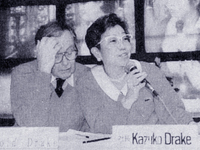
     当コーナーの開設にあたって、専属のアドバイザリースタッフを迎えました。ヨーロッパ・アメリカ・オーストラリアなど海外に広いネットワークを持ち、学生の海外留学を長年にわたってサポートしてきた東京の「ネットワード・インターナショナル LTD.」の和子・K・ドレイクさん。豊富な海外経験と日本での教師経験を生かし、これまで多くの日本人留学生を手助けしてきた人です。

     みなさんの質問に対して誌上で、またダイレクトにアドバイスをしてくれる予定です。

    「海外をめざす高校生のみなさんへ」ネットワード・インターナショナル
    十分な準備が肝心
     海外留学を志すからには、夢や憧れだけをふくらませても意味がありません。学生時代の貴重な時間と、大切なお金を使うのですから、有意義な留学体験にするための準備こそ十分に考慮されるべきです。
     みなさんが大学入学後に留学を予定する場合、大きく分けて2つの分野での作業を始めることが懸命です。

    A. 事務的分野の準備
    1. どこの国で勉強したいのか
    2. 何を勉強したいのか
    3. 必要とされる学力・専門知識のチェック
    4. 学費・生活費・渡航費等のチェック
    B. 精神的分野での準備
    1. 選んだ国の習慣、歴史、国民性、地理的立地条件、気候、政治、文化等の正しい予備知識を得る
    2. 留学体験者の生の声、実例等を数多く聴取する
    3. 日本人としてのアイデンティティーをしっかり身につける
    留学先での心構え
     さて、確かな準備を経て留学本番を迎えると、渡航先での対処の仕方が重要なポイントになります。「Positive thinking, Positive attitude, Curiosity, Common sense」(肯定的・積極的なものの考えかた・態度、好奇心および興味、常識すなわち人にたいする思いやり、感謝の気持ち)を十二分に持ち合わせて発揮し、間違いを恐れず、自身をもって物事に対処することです。
    高い意識を持とう
     世の中には完全なものは何ひとつありません。完全なものを作りだそうとする努力、世界の人々が心をひとつにして異なった言語・文化・風習を理解する努力こそが何にも勝る価値ある行為です。
     みなさんの長い一生のより良き未来への布石の一つとして、海外留学を志し実践しようとすることは素晴らしいことだと思います。
     そんな意識の高い読者のみなさんの正しい道案内役をつとめられることに、大きな喜びを感じます。どうか少しでも興味のある人は、どんどん気軽に質問を寄せてください。

    和子・K・ドレイク

    参照:教育新聞社「私大コース」1991年6月号より

  • 日本の英語教室にホームステイ協力実施

    『ネットワード・インターナショナル・サービス(以下、Netword)』代表取締役、『パシフィック異文化教育アカデミー(以下、PCA)』理事長『読売理工学院オーストラリア事務局』事務局長「和子・K・ドレイク」がメディア掲載、取材等で取り上げられた記事を紹介致します。
    以下、掲載記事


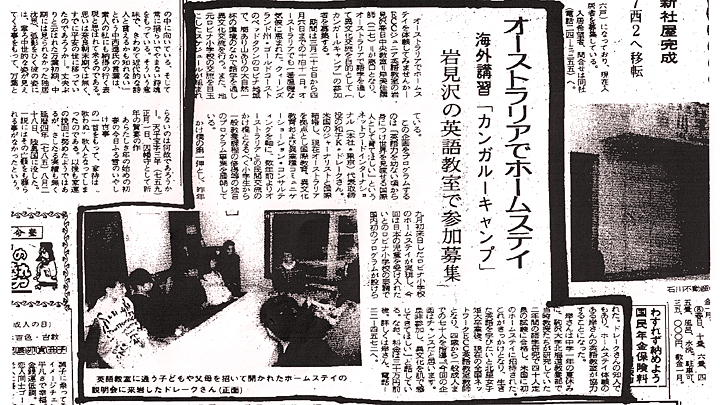
    オーストラリアホームスティ 海外講習「カンガルーキャンプ」
    岩見沢の英語教室で参加募集

    写真:日刊岩見沢新聞
    写真:英語教室に通う子どもや父母を招いて開かれたホームステイの説明会に来岩したドレイクさん

     オーストラリアでホームスティを体験してみませんか——ECCジュニア英語教室の岩見沢春日中央教室=岸美佳講師(二七)=が窓口となり、オーストラリアで語学を通して異文化交流を目的として「カンガルーキャンプ」の参加者を募集する。期間は三月二十七日から四月六日までの十泊十一日。オーストラリアでも一番温暖な気候に恵まれた、クイーンズランド州・ゴールドコーストのベッドタウンのロビナ地域で、海あり山ありの大自然一杯の環境のなかで語学を通し異文化交流を行う。また、地元ロビナ小学校の交流を目玉にしたスケジュールが組まれている。

     この企画をプログラムするのは「英語力を幼ない頃から身につけ世界を見渡せる国際人として育てほしい」というネットワードインターナショナル(本社・東京)代表取締役の和子K・ドレイクさん。米国のジャーナリストと国際結婚し、現在オーストラリアを拠点とし国際教育、異文化教育および異業種コミュニケーション・コンサルティングを軸に、数年前よりオーストラリアとの民間交流のかけ橋となるべく小学生から一般教養課程の修得等の独自のプログラム事業を展開している。 かけ橋の第一弾とし、昨年九月初来日したロビナ小学校のホームスティが実現し、今回は日本の児童を受け入れたいとのロビナ小学校の要請で国内初のプログラムが設けられた。ドレイクさんの知人でもあり、ホームスティ体験のある岸さんの英語教室が協力することになった。

     岸さんは中学一年の夏休みに駒沢大学北海道教養部で当時教授たちが研究していた二年間の語学研究で四十人定員の試験に合格し、米国に初のホームスティに招待された。これがきっかけとなり、生きた英語を学びたいと北星女子短大卒業後、現在の全国ネットワークECC英語教室教師となり、四歳から一般成人までの七十人を指導。「今回の企画はチャンスだと思います。是非参加し、異文化を肌で感じてきてほしい」と話している。なお、料金は三十万円前後。

    掲載記事:【日刊岩見沢新聞 Jan15、1991】

  • ハル、カズ・ドレイク宅取材記事

    『ネットワード・インターナショナル・サービス(以下、Netword)』代表取締役、『パシフィック異文化教育アカデミー(以下、PCA)』理事長『読売理工学院オーストラリア事務局』事務局長「和子・K・ドレイク」がメディア掲載、取材等で取り上げられた記事を紹介致します。
    以下、掲載記事


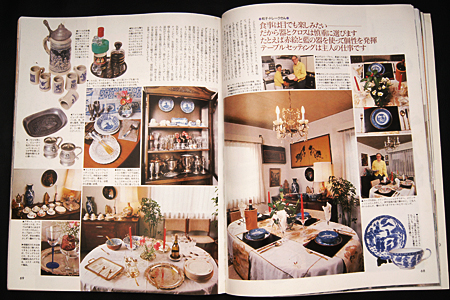
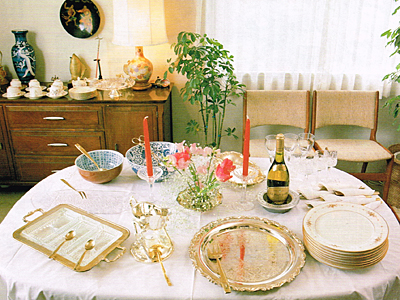
    写真:美しい部屋『別冊:生活便利カタログ』

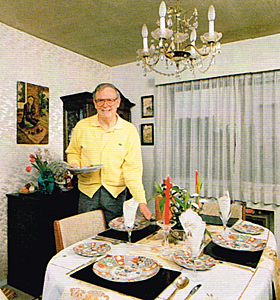
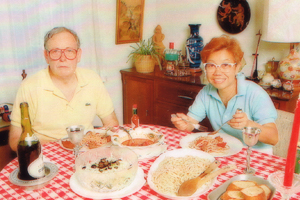
    和子・ドレークさん:食事は目でも楽しみたい——だから器とクロスは慎重に選びます。たとえば赤絵と藍の器を使って個性を発揮、テーブルセッティングは主人の仕事です。

    ご主人のハルさんはジャーナリスト、奥様の和子さんも世界を舞台にした仕事をしているとあって、世界の料理はひと通り体験済みというドレークさんご夫婦は、自他ともに認めるグルメ。

    「私たちにとって食事とは、単に空腹を満たすことではなくて、料理はもちろん、食卓の雰囲気も一緒に味わうということなんです」という2人だけに、食卓の演出には徹底的にこだわります。まず、季節の花とキャンドルは絶対に欠かさず、そして、たとえばイタリア料理には赤と白の器とクロス、ドイツ料理には青と白の器とクロスというように、料理に合わせて器とクロスを選びます。なかでも出番が多いのが、日本の赤絵と藍のアンティークの器です。和食はもちろん、ステーキやサラダなどの洋食にも不思議とぴったりマッチします。「日常使いの器に赤絵なんてもったいない、というのは日本人の感覚。日本人は食器も来客時用と普段用に分けて、どんなに料理が変わっても、日常使いの器はいつも同じ。毎日のことだからこそ、もっと気をつかって楽しめばいいと思いますね」

    そんな考えの2人は、パーティのときにも特に気負わず、お気に入りのこの器を中心としたセッティングで、お客様をもてなしています。器の模様も形も変化に富み、アイデアしだいで個性的な演出ができるとあって、凝りがいもアップ、もちろん、お客様の間でも大好評!ことに海外からのお客様の目には新鮮に映るらしく、初めて見る日本の器の美しさに魅せられて、帰国時に同じ器を買って行く人も多いそうです。

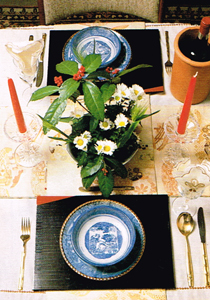
    写真:ハル、カズ・ドレイク宅取材
    写真:まずはスープから。黒塗りのお盆に、深みのある藍の器がよく映える。この器は和子さんのお嫁入り道具で、実家の蔵に収蔵してあった、なんと100年も前のアンティーク品だとか。

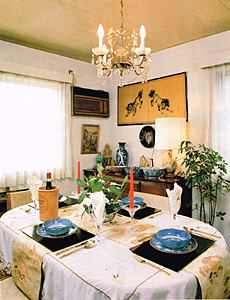
    写真:ハル、カズ・ドレイク宅取材
    写真:帯のセンタークロスやグラスのキャンドルスタンドなど、枠にとらわれない自由な発想で食卓を個性的に演出。バナナ繊維で編んだフィリピン製のテーブルクロスとナプキン、ラオス製のスプーンなどを合わせ、国際色も豊か。

    写真:ハル、カズ・ドレイク宅取材
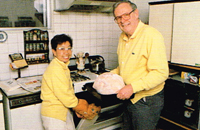
    写真:クッキングもご主人の大得意。特に鶏や鴨などの鳥料理が十八番。誕生日や感謝祭のディナーには、必ずご主人お手製のローストターキーが登場する。

    写真:ハル、カズ・ドレイク宅取材
    写真:スープの次は、メインディッシュとサラダへ。メインディッシュにふさわしく、伊万里焼の器で華やかに。ご主人のハルさんが、慣れた手つきでテキパキとサービング。

    写真:ハル、カズ・ドレイク宅取材
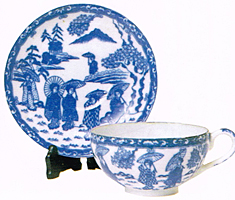
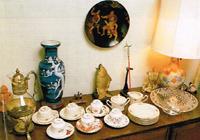
    写真:大正時代に作られたカップ&ソーサー。当時の風俗がよくあらわれている。10年ぐらい前に骨董品市で500円程度で購入。

    写真:ハル、カズ・ドレイク宅取材
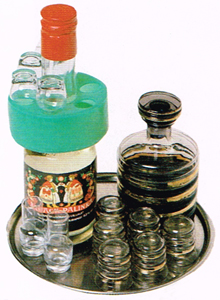
    写真:友人から贈られたフランスの蚤の市で見つけたリキュールとハンガリーのウォッカセット。ウォッカのグラスの形もさることながら、収納法もなかなかユニーク。

    写真:ハル、カズ・ドレイク宅取材
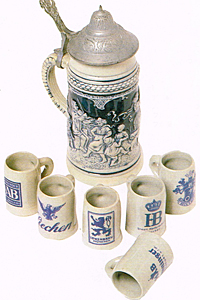
    写真:ビールの本場、西ドイツでご主人が勝ってきた陶製のふたつきビアマグとミニチュアのセット。歌って踊って陽気に騒ぐドイツ人たちをモチーフにしたレリーフが凝っている。

    写真:ハル、カズ・ドレイク宅取材
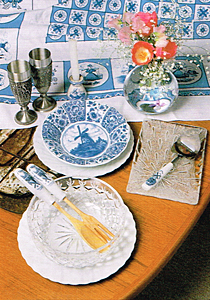
    写真:こちらは、すべてオランダ製。ピー(豆)スープを食べるときはデルフトの皿を使う。それに合わせてクロスはもちろん、サーバーの柄まで青と白でそろえる心くばりが粋。

    写真:ハル、カズ・ドレイク宅取材
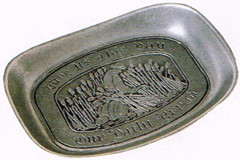
    写真:アメリカ製でピューター社のパン皿。色、武骨な質感、愛敬のあるデザインが、ライ麦パンにぴったり。

    写真:ハル、カズ・ドレイク宅取材
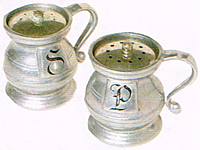
    写真:こちらも同じく、ピューター社のソルト&ペッパーセット。じゃが芋を使った田舎料理のときに使いたい。

    写真:ハル、カズ・ドレイク宅取材
    写真:ランチタイムやラフなパーティには、ビュッフェスタイルで、手前右から時計回りで一巡し、最後にワイングラスを手にする。合理的な配膳に納得。

    写真:ハル、カズ・ドレイク宅取材
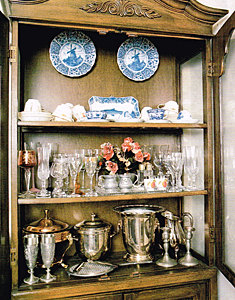
    写真:欧米では、食器のコレクションを飾りつけて収納し、ゲストの目を楽しませてくれるのが一般的。和子さんも、このキャビネットをディスプレイ用に使っている。

    写真:ハル、カズ・ドレイク宅取材
    写真:デザート、コーヒーのセットは、テーブルの後ろにあるサイドボードの上に。カップはセットでそろえず、好みの柄を少しずつ集めている。

    写真:ハル、カズ・ドレイク宅取材
    写真:結婚式の引き出物や記念日に贈られたりすることが多いのが、ワイングラスだとか。カッティングの繊細な右のグラスは、コスタ・ボダ社の製品。

    掲載記事:【美しい部屋『別冊:生活便利カタログ No.11』 1990.03.25】

  • 教育新聞掲載『世界的規模の、でっかいサークルだ』

    『ネットワード・インターナショナル・サービス(以下、Netword)』代表取締役、『パシフィック異文化教育アカデミー(以下、PCA)』理事長『読売理工学院オーストラリア事務局』事務局長「和子・K・ドレイク」がメディア掲載、取材等で取り上げられた記事を紹介致します。
    以下、掲載記事


    『世界的規模の、でっかいサークルだ』

    ネットワード

     ネットワード・インターナショナルは、テニスを通じて、リソートクラブの国際的なコンサルティング、トーナメント企画など、世界的な視野で活動を広けるサークルだ。

     その代表、和子・K・ドレイクさんは、アメリカ人のジャーナリスト、ハ口ルド・ドレイク氏と結婚後、幅広い活動を行なっている。

    「今の若い人たちって、よく海外旅行するでしょ。でも、買い物してディスコ行くだけでは、ちょっとつまらないわよね。スポーツをしたり、現地の人たちと友だちになったり、その土地の空気に触れることが大切だと思うの」

     彼女の話を聞いていくうちに、イメージが、少しずつ具体的になっていく。

    「海外旅行とかリゾートとか、それから留学とか、勉強にしても遊びにしても楽しんでほしいですね。その楽しんでもらうことのお手伝いを、私はやりたいの。今、いちばんホットなところはオーストラリアね。そして、ヨーロッパかしら。関係者の方と協力してテニスやゴルフ・ツアーなど、いろいろなリゾートのコンサルティングをやって人と人との架け橋のような仕事を進めています。
    材料はたくさんあるんです。あとはそれをどういうふうに料理しようかということかしらね(笑)」

     彼女の夢は世界に広がる。そして、昨年からオーストラリアのツアーをはじめ、様々な企画、か現実になり始めている。まさに、彼女の夢は、世界的な規模のでっかいサークルを作ることなのだ。

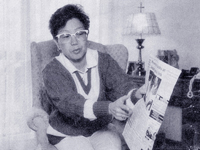
    写真:和子・KAZ・ドレイク
    英字新聞に紹介された記事を見ながら、ネットワードは、世界のテニス・ファンを結ぶことが夢だと話す

    写真:FM放送主催のDJ選考会に参加のドレイク夫妻
    FM放送のミスDJの選考会にも参加。左が御主人。ネットワードの活動は様々な分野に広がっている!

    掲載記事:教育新聞(教育新聞社)【1989.10.01】

  • 映画『ゴッドファーザー』秘蔵レシピ

    『ネットワード・インターナショナル・サービス(以下、Netword)』会長、『パシフィック異文化教育アカデミー(以下、PCA)』学院長「ハロルド・A・ドレイク」がメディア掲載、取材等で取り上げられた記事を紹介致します。
    以下、掲載記事


    話題プラス1 『話題』でとりあげた情報の、商品、ノウハウなどをさらに詳しく紹介!

     暗黒街を牛耳るドン・コルレオーネは対立グループに銃撃され、瀕死の重傷を負う。主を欠いたコルレオーネ一家を動揺と緊迫が支配する——

     F・コツポラ監督の映画『ゴッドファーザー』前半のヤマ場である。

     この中にジャーナリストのハロルド・A・ドレイク氏が指摘する問題のシーンがあった。

     「クレメンザという兄貴分が、アル・バチーノ扮する扮するマイケルにスパゲッティソースの作り方を教えるんです。缶詰の材料で素早く簡単にできるもので、いわば非常事態向けの簡単料理ということでしょう」

     この場面、実はわずか30秒ほどのシーンなのだが、食いしん坊を自称する氏はこれを見逃さなかった。すぐにビデオを繰り返し巻き戻し、そのレシピを書きとめ、映画と同じソースを再現してみた。その料理を再現してみた。

     レシピの単純さに反して、昧はコクのあるすばらしいものに仕上がった。これが1年前のこと。以来『ゴッドファーザー・ソース』はドレイク家の名物料理となった。

     取材に、プライベートな旅行にと、グローバルに行動してきたドレイク氏は、世界各地の訪問先で気に入った料理に出会うと、その味を舌で覚えてくる。そして自宅に戻れば、キッチンで試行錯誤の”悩めるシェフ”と化す。このときの強力な助っ人が和子夫人だ。

    訪問客の感嘆の声も楽しみ

     「やはり”男の料理”の域を出ないですね。だから、妻の細かなアドバイスがなければ私の料理は成立しないでしょう。でも夫婦で、ああでもない、こうでもないと、料理を作っている時聞が楽しいんです」

     客を招いた際には「えっ、ご主人がお作りになったんですか?」という相手の驚きの声から、会話が弾むこともしばしばだそうだ。「週末は月に2〜3度キッチンに立ちます。テーブル・コーディネ ートに凝るのも楽しみです」

     この週末も、ドレイク家では楽しい宴が予定されているという。そして、それは「コッポラに乾杯!」という氏の笑顔と、シャンパングラスの弾ける音で始まるはずだ。

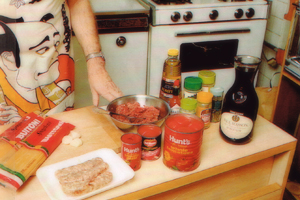
    『ゴッドファーザー・ソース』

    写真:

    材料(8人分)
    ・スパゲッティ:8人分
    ・牛ひき肉:500g
    ・イタリアン・ソーセージ: 500g
    ・にんにく:3片
    ・ホールトマト:1kg
    ・トマトソース:300g
    ・トマトぺースト:200g
    ・赤ワイン:300cc
    ・スパイス

     数年前、腎臓結石の手術をしたドレイク氏は、以来、料理にはほとんど塩を使わない。このソースも、ガーリックソルトをほんの少量加えるだけだ。

     「その代わりにスパイスをたっぷり使うんです。スパイスの風味だけで充分、おいしく食べられますよ。ヘルシープームのアメリカでは最近、減塩のために、スパイスを多めに入れる料理法が増えています」(和子夫人)さて『ゴッドファーザー・ソース』。ドレイク氏がいくつかのポイントを教えてくれた。

    ●麺はゆですぎない
    ドレイク家では9分ゆでの『ブイトーニ』がお気に入りだそうだ。8分半ほどで麺を潰してみて、針先ほどの芯が残っていたら火を消す。あとは余熱で「アル・デンテ」(ほどよい固さ)に。

    ●スパイスを効かせる
    イタリアンソーセージは高級食料品店でも手に入るが、ない場合は、オレガノをたっぷり入れると”本場場”の味に近づく。

    ●牛肉は赤身を

    できれば、赤身の部分を指定して、その場でひいてもらうとよい。またミートボールとソーセージは、サッと焦げ色がつくぐらいにソテーしてから煮込んでも、おいしい。ちなみに使用する赤ワインは、カリフォルニア産の『ポール・マッソン』。「シャンパンですら米国産のものが”世界一おいしい”というんですよ」夫人が笑って、つけ加えた。

    『ゴッドファーザー・ソース』の作り方

    写真:『ゴッドファーザー・ソース』の作り方
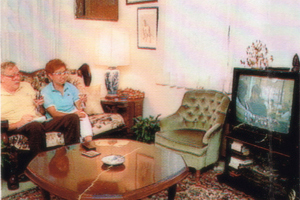
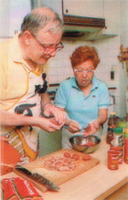
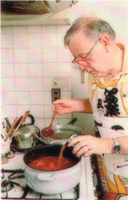
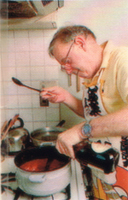
    ①リビングルームで『ゴッドファーザー』のビデオを見るドレイク夫妻。『ラコステ』 のポロシャツをペアで着るほどの仲睦まじさ

    写真:『ゴッドファーザー・ソース』の作り方
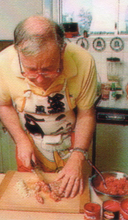
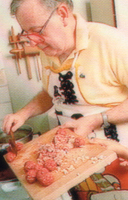
    ②にんにくはみじん切り、ソーセージは1cm厚さに切っておく。

    写真: 『ゴッドファーザー・ソース』の作り方
    ③牛ひき肉にオレガノ、ガーリックソルトを加え、3cm大に丸める。

    写真:『ゴッドファーザー・ソース』の作り方
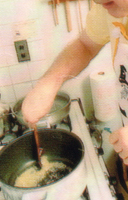
    ④多めのオリーブオイルを熱し、にんにくをきつね色に炒める。

    写真:『ゴッドファーザー・ソース』の作り方
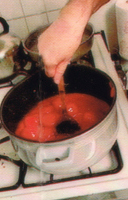
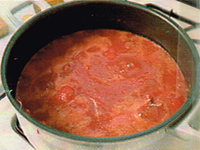
    ⑤④にトマ卜の缶詰3種を加える。ホールトマトは木べらで潰す。

    写真:『ゴッドファーザー・ソース』の作り方
    ⑥⑤が煮立ったら、③ミートポールと、ソーセージを加える。

    写真: 『ゴッドファーザー・ソース』の作り方
    ⑦味を見て濃いようなら、水を加えて調節する。

    写真:『ゴッドファーザー・ソース』の作り方
    ⑧赤ワインを加え、再び煮立ったら、ふたをして弱火で20分煮込む。

    写真:『ゴッドファーザー・ソース』の作り方
    ⑨できあがり。時間があれば、小1時間煮込むと、よりコクが出る。途中、浮いてくるアクをとればベター。

    ハロルド・A・ドレイク
    『バシフイック・スターズ & ストライプス』紙、シニア・ライター兼エディター。51歳。米国・加州サンタモニカ生まれ。ロサンゼルス・シティ・カレッジ卒。日本特派員として1956年から韓国・ベトナムなどに勤務。

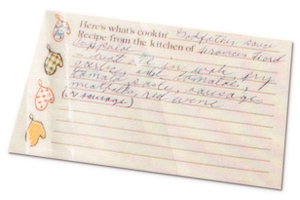
    写真:『ゴッドファーザー・ソース』レシピ
    映画から書きとったレシピ。”コッポラのキッチンから。”との言葉も。

    写真: ドレイク夫妻
    12閑静な代々木の一軒家に住む。和子夫人はテニスクラブやスクールなどを運営する『ネットワード』の社長。2人の子息は在米

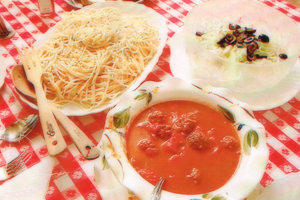
    写真:『ゴッドファーザー・ソースパスタ』
    これが『ゴッドファーザー・ソース』。キャベツのサラダと。イタリア料理のときは、クロスもイタリア製のものを使うそうだ。

    取材・文/松木淳 撮影/多賀谷敏雄

    掲載記事:サライ 第1巻 第3号 通巻3号【小学館 1989.10.19】

  • セブンシーズフォーラム

    『ネットワード・インターナショナル・サービス(以下、Netword)』会長、『パシフィック異文化教育アカデミー(以下、PCA)』学院長「ハロルド・A・ドレイク」がメディア掲載、取材等で取り上げられた記事を紹介致します。
    以下、掲載記事


    『Seven Seas Forum』一流ホテルの宝物

    文:ハロルド・ A・ドレイク(パシフィックスターズ&ストライプス シニアライター/エディター)

    写真:Hal A. Drake

     私の趣味は、泥棒稼業。雑魚は相手にせず、一流ホテルやレストランに堂々と侵入しては最高のものだけを盗み出し、自分の家にコレクションをして楽しんでいます。といっても、もっぱら料理のレシピなんですが(笑)
     なかでも傑作なのは、F・コッポラ監督の映画「ゴッドファーザー」の一場面に登場してきたスパゲティソースです。見るからにおいしそうで、ビデオを見ているうちにたまらなくなってきた妻と私は、その部分の画面を少しずつ巻き戻してはレシピを書きとめ、見よう見まねでさっそく作ってみました。するとこれが大成功!コクがあって、実においしいんです。今では我が家の定番料理。来客時のもてなしにもたびたび登場しています。
     同じ罪を犯すなら、株式市場の操作やポンド債のごまかしよりも、お洒落で楽しいこの類の”窃盗罪”のほうをお勧めしたいですね。
     いったんキッチンに入ってドアを閉めてしまえば、そこには全くの別世界。週末は仕事や嫌なことはすべて忘れて気分一新、ひたすらクッキングに没頭します。残念ながら手際のほうか鮮やかとはいえず、”男の料理”の常でキッチンも惨憺たる状態(笑)。でも、妻が大目に見てくれているので、助かっています。
     長期休暇や仕事で海外に出かける時は、土地の味を必ず楽しむことにしています。また、アンティークも好きで骨董屋も覗きますが、食器やテーブルクロスなど、まず料理関係の小物に目がいってしまいますね、やっぱり。

    掲載記事:セブンシーズ(株式会社アルク)【1989.02.20】

  • Along The TOKAIDO with Hollistar Ferretti

    『ネットワード・インターナショナル・サービス(以下、Netword)』会長、『パシフィック異文化教育アカデミー(以下、PCA)』学院長「ハロルド・A・ドレイク」がメディア掲載、取材等で取り上げられた記事を紹介致します。
    以下、掲載記事


    Along The TOKAIDO with Hollistar Ferretti

    Mainishi Daily News by Hal Drake

    Heralding the coming of spring and in a glorious celebration of thanksgiving for the bounty of year round flowers, the city of Miyazaki holds a Flowers Fiesta. Hundreds of thousands of flowers in a tapestry of thousands of flowers in a tapestry of color coordinated, patterned patches, transform the General Sports Park into a dreamland. The spectacular opened with a grand show of pomp and ceremony on March 27 and will continue until April 27.

    写真:Teizo Nagatomo,Lee Khoon Choy
    Mayor Teizo Nagatomo greeting Amb. and Mrs. Lee Khoon Choy of Singapore at the Miyazaki Flower Fiesta.

    This floral extravaganta attracts great crowds every year and it gives visitors a chance to explore the wonders of Miyazaki Prefecture, the birthplace of Japan.

    Responding to an invitation by Mayor Teizo Nagatomo of Miyazaki City, a representative group from the diplomatic corps were honored guests at this year’s Flower Fiesta. Enjoying the experience were Ambassador and Mrs. Posthumus Meyjes of the Netherlands, Ambassador and Mrs. Lee Khoon Choy of Shingapore, Counselor and Mrs. Kyu Jung-hwang of Korea, First Secretary and Mrs. David Middleton of the U.K. and their son Henry, Cultural Attache David Anido of the Canadian Embassy, Mr. and Mrs. William Morgan, director Fukuoka American Center United States Information Center.

    In Tokyo, the outing was coordinated by Nobuyuki Sakamoto, associate managing director, Foundation of International Education, and his team from the related International Intelligence Communication Center, Kaz Drake, Osamu Kato and Richard Nibley.

    Debarking from their hour-and-forty-five-minute ANA flight, the VIPs were met by city officials and a battery of news photographers.

    写真:Mitsuaki Kawagoe,Meyjes
    The Netherlands Amb. Posthumus Meyjes, Mayor Mitsuaki Kawagoe of Nishinan and Mrs. Meyjes at Obi.

    Miyazaki would seem to be a city of gardeners. Trees and plants along the roadside have a well-tended appearance. The program, initiated some years ago, has expanded. Between the devotion of the city, Miyazaki will indeed be a garden city, completely landscaped.

    Luncheon atop the Plaza Hotel, overlooking the Oyodo River proved a pleasant ice breaker and offered an aerial view of the city.

    写真:Korean Counselor,Kyu Jung-hwang
    Korean Counselor and Mrs. Kyu Jung-hwang at the shrine on Aoshima Island.

    Lodgings were in the Hotel Phoenix, a modern, class hotel overlooking 36-hole golf course and the ocean. This is the site of the prestigious Phoenix Dunlop Tournament with the largest purse in Japan.

    写真:Lee Khoon Choy,Richard Nibley
    Amb. And Mrs. Lee Khoon Choy with Richard Nibley(center) at the gate of Obi Castle.

    The evening of their arrival, at the reception held in their honor, they were greeted by Mayor Teizo Nagatomo of Miyazaki City, Mayor Shigemi Nakatake of Saito City, Mayor Mitsuaki Kawagoe of Nichinan City and other dignitaries.

    The buffet was lavish and the service superb. Welcoming speeches were warmly received and graciously answered. In the brief ceremony, Amb. Lee presented Mayor Nagatomo with a bouquet of orchids, Singapore’s national flower. In comparing the two countries, the ambassador said that Singapore had but a short history and their citizenry represented many ethnic origins. For example, the hybrid orchid that is their national flower was discovered by an Armenian girl in a bamboo grove… their national anthem was written by an Indonesian.

    Amb. Meyjes reminded his hosts of the long association of their two countries. During the centuries of the Tokugawa isolation policy, the Dutch station at Deshima was Japan’s window to the Western world. It was singularly appropriate that the Netherlands was represented at the Flower Festival as their flower industry is of major importance to their economy, the export of cut flowers and bulbs flown to world markets. They have, however, run into difficulties getting bulbs into Japan, a problem they have been addressing for some time. “And so I can symbolically present you, Mayor Nagatomo, with but a single bulb.”

    写真:David, Henry,Georgina
    The Middleton family David, Henry and Georgina.

    Robert Adams of Miyazaki Medical College presented an enchanting slide show picturing the sites of legendary Japanese mythology accompanied by his informative, humorous narration.

    The sun hid behind a cloud cover, but nothing could shade the dazzle of the breathtaking floral presentation. The honored group watched the ribbon cutting, were seated on stage for the opening ceremony and toured the premises.

    Miyazaki Prefecture has a treasure trove to offer the tourist. The Japanese are well aware of the ideal climate, the natural beauty and the historical significance of the area, but few foreigners are. The prefecture, reaching out to attract overseas visitors, embarked on a reconstruction program several years ago to give a better picture of the past, augmenting the attraction of their extensive resort facilities. They hastened to show their visiting dignitaries.

    Miyazaki was known as Hyuga(the country facing the sun) until the Meiji Era. The Takachiho peak in the Kirishima mountains was the point where the sun goddess Amaterasu’s grandson Ninigino-mikoto descended to earth. Jimmu, Japan’s first emperor, was born and lived in Hyuga until he was 45 years old when he embarked with his sons and military contingent for Yamato, present-day Nara. Until the end of the Pacific War, these legends were accepted as fact. The shrines in the area are numerous and each has a fascinating history.

    Saitobara, the site of ancient burial grounds, has some 329 mounded tombs dating from the Kofun Period(ca300-710). Although a program of excavation was carried out in 1912 and again in 1917 by the Imperial Household Agency, no more have been allowed. Armor, weapons, horse trappings and other cultural artifacts were uncovered. Some are contained in a local museum, but the finest examples are now in the Tokyo National Museum and at Kyoto University.

    写真:David Anido,Kyu Jung-hwang
    David Anido giving Kyu Jung-hwang a hand before entering a shrine.

    What a wealth of information concerning the ancients lies untapped in Saitobara! The locals may be a bit impatient to have other of the ancient burial mounds excavated, but they respect the proprietorial rights of the Imperial Family and they carefully tend the mounds, evidence of their proud heritage. Anair of reverence shrouds these tombs of the legendary figures of Japan. Here is the tomb of Ninigino-mikoto, the grandson of the sun goddess Amaterasu, and in turn the grandfather of Jimmu.

    The Udo Imperial Shrine is a gem. Reputed to be the birthplace of Ugayafukiaezu no Mikoto, father of Japan’s legendary first emperor Jimmu, the shrine was erected in the time of Empress Suiko(593-628). Modern intervention has eliminated a great number of steps, making it more easily accessible. The brilliant crimson of the torii and of the structure at the cave’s entrance give it a festival air, but the antiquity is awesome.

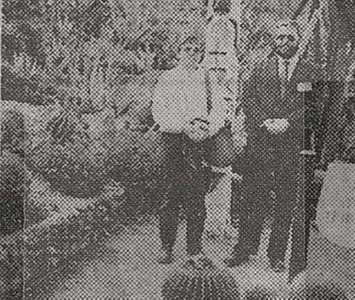
    写真:Valeri,Bill Morgan
    Valeri and Bill Morgan at the Cactus Garden.

    Miyazaki Shrine, dedicated to Emperor Jimmu, is built on the site of Jimmu’s residence. The Miyazaki Shrine festival held in October is the largest in the prefecture. The participants dress in costumes of old.

    Besides these reminders of Japan’s ancient history, they have wonderful evidences of the Tokugawa Period castles and samurai towns. The Obi Castle of the Itoh clan, built on a leveled mountain, was originally a nine citadel and building complex. This is the site of the longest armed conflict in Japanese history, an 83-year long was between the Itoh and the Shimazuclans. The Matsunomura, the Obi lord’s residence, was reconstructed about 10 years ago after careful research on every detail. Not in lonely splendor, in the neighborhood are samurai houses,a museum containing many of the heirlooms of the 14 generations of Itoh rule, the Shintokudo, a school for samurai boys, a Merchant Museum displaying the life of Obi merchants and other reminders of a bygone era.

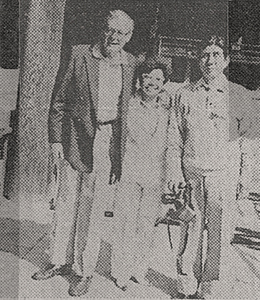
    写真:Hal and Kaz Drake,Nobuaki Sakamoto
    Hal and Kaz Drake with Nobuaki Sakamoto at the Miyazaki Shrine.

    In Aya, another part of the prefecture, spanning a precipitous gorge is the world’s highest and longest suspension bridge for walkers. In this land of clear streams abounding with fish and Japan’s largest stand of virgin forest in the Aya castle, a fortress of the Middle Ages. The area is famous for their traditional folk handicraft, textiles, woodcraft and ceramics.

    Space limits our description. We’ve not touched upon Aoshima Island with its distinctive rock formation, the intriguing devil’s washboard, and only hinted at the beautiful stretches of beach, the water sports, the safari park, the zoo and dozens of other attractions. And not least among them are the genuinely friendly people and something so basic as wonderfully clean, fresh air!

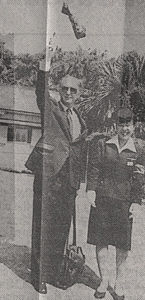
    写真:Posthumus Meyjes
    Amb. Posthumus Meyjes giving a helping hand to his amused guide.

    Miyazaki has everything going for it, the full spectrum of ancient, medieval and modern culture within the framework of a great resort area. We’ve only skimmed the surface. Here’s Japan’s answer to the Riviera. Less than two hours from Tokyo by air, about an hours from Osaka or 40 minutes from Fukuoka, a weekend is great for a change of pace, but it only whets the appetite. A longer stay would be ideal.

    Ciao!

    掲載記事:【デイリー毎日 1988.04.11】

  • 「アメリカ英語?」「イギリス英語?』

    『ネットワード・インターナショナル・サービス(以下、Netword)』会長、『パシフィック異文化教育アカデミー(以下、PCA)』学院長「ハロルド・A・ドレイク」がメディア掲載、取材等で取り上げられた記事を紹介致します。
    以下、掲載記事


    East Meets West(by Harold A. Drake)

    Very often, the Japanese see Westerners as they fail to see themselves, particularly the peculiar differences in one language.
    Is English a single language, one unvaried mother tongue? Not as a lot of astute Japanese see it – the people who post those signs in box offices.
    Any foreigner in Tokyo has seen them, under the movie-marquee paintings of Alain Delon, Sylvie Vartan or whoever. Signs at the ticket-seller’s elbow will warn that the dialogue is in French or Italian, with Japanese subtitles, so that some unwary Australian or American doesn’t wander info a film he won’t understand.
    Japan is one of the greatest international film markets in the world. Any language from Hindi to Serbian might turn up on a soundtrack.
    And English, always. “A Tale of Two Cities” – dialogue in English, “My Fair Lady” – the same. But in that film, Professor ‘entry ‘iggins deplores a language that been vulgarized by slang and patois. It is an endangered species in England, he sings, and “in America, they haven’t spoken it for years.” Somebody in Tokyo, making up one of those signs, agreed with him. There was a film with Glenn Ford and Debbie Reynolds. Dialogue in American. Was it somebody who ‘ended ‘enry ‘iggins? Or was it a Japanese who boarded a cab in London, to be asked “where to, guv,” them moved on the New York to her, “where ya wanna go, Mac?”
    There is a difference, and one thoughtful fellow here though that innocent moviegoers should be warned.


    東西の接点(文章:ハロルド・A・ドレイク)

     日本人が西洋人をながめる場合、西洋人が自分で気付かないような姿に写っていることがよくあります。これは特に、1言語のなかにみられる独特な相違について言えます。
     例えば英語は1つの言語、1種類の変わらない母国語と言えるでしょうか。物の見方の厳しい多くの日本人は、そう見ていないようです。少なくとも、映画館の切符売場に例の注意書きを貼り出している日本人は、そう考えていません。
     この掲示は、東京にいる外人なら必ず見ています。ほら、映画館の張り出しに描かれたアラン・ドロンやシルビー・バルタンなどの顔の下にあったでしょう。切符売りのわきに出ている掲示をみると、この映画のセリフはフランス語とかイタリア語とかで、日本語の字幕つき、と書いてあります。これは不注意なオーストラリア人やアメリカ人がうっかり迷い込んで、言葉のわからない映画をながめるハメになるのを防ぐためです。
     日本は世界屈指の国際映画市場で、ヒンディ語からセルビア語まで、どんな国の言葉がサウンドトラックから飛び出してくるかわかりません。英語も、もちろん出てきます。
     『二都物語』——英語版。『マイ・フェア・レディ』——も同じく英語版。しかし、映画を見ると、ヘンリー・ヒギンズ教授——ロンドンの下町風に言えば「エンリー・イギンズ」教授——が、こう欺いています。「英語はスラングや田舎言葉で卑俗化してしまった。イギリス国内で絶滅の危険にさらされているのが英語だ。」そして、こう歌うのです。「アメリカで英語が聞かれなくなり、もう何年になるのか——」
     東京にはこうした意見の同調者がいるようで、例の掲示の1つにこんなのがありました。
     グレン・フォードとデビー・レイノルズ主演の映画が上映されたときのことです——「セリフ——アメリカ語」!
     エンリー・イギンズ教授の教えに忠実な者の仕業でしょうか?それともこの日本人は、ロンドンでタクシーに乗って、こう聞かれた経験の持主でしょうか。「どけーやるかね、だんな?」ところがニューヨークに飛ぶとこう言われるのです。「どこいくんや、大将?」
     なるほど、違います。そこで気くばりのきいた人物が、無邪気な映画見物の観客に警告することを思いついたのでしょう。

    掲載記事:Service Club News Vol.3-88-1(フィリップス・ランゲージ・システムズ株式会社)【1988.02.01】

  • Lantz recalls his near miss with Woody

    『ネットワード・インターナショナル・サービス(以下、Netword)』会長、『パシフィック異文化教育アカデミー(以下、PCA)』学院長「ハロルド・A・ドレイク」がメディア掲載、取材等で取り上げられた記事を紹介致します。
    以下、掲載記事


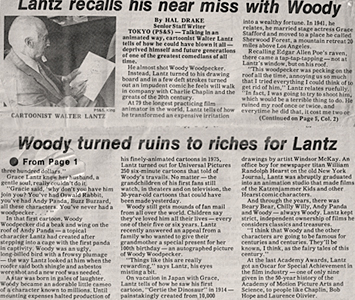
    Lantz recalls his near miss with Woody

    June, 12′ 79

    By Hal Drake[Senior Staff Writer]

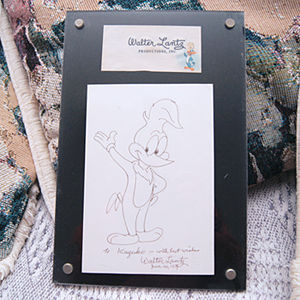
    Walter Lantz
    photo:Carttonist Walter Lantz

    Tokyo(PS & S) — Talking in an animated way, cartoonist Walter Lantz tells of how he could have blown it all — deprived himself and future generations of one of the greatest comedians of all time.

    He almost shot Woody Woodpecker.

    Instead, Lantz turned to his drawing board and in a few deft strokes turned out an impudent comic he feels will walk in company with Charlie Chaplin and the greats of the 20th century.

    At 79 the longest practicing film animator in the world, Lantz tells of how he transformed an expensive irritation into a wealthy fortune. In 1941, he relates, he married to a place he called Sherwood Forest, a mountain retreat 20 miles above Los Angeles.

    Recalling Edgar Allen Poe’s raven, there came a tap-tap-tapping — not at Lantz’s window, but on his roof.

    “This woodpecker was pecking on the root all the time time, annoying us so much that I tried everything I could think of to get rid of him,” Lantz relates ruefully. “In fact, I was going to try to shoot him, which would be a terrible thing to do. He ruined my roof once or twice, and every time he did that, it cost me two or three hundred dollars.”

    Woody turned ruins to to riches for Lantz

    Grace Lantz knew her husband, a gentle soul, really could’t do it.

    “Gracie said, ‘why don’t you have him join you? You’ve had Oswald Rabbit, you’ve had Andy Panda, Buzz Buzzard, all these characters. You’ve never had a woodpecker…’”

    In that first cartoon, Woody Woodpecker did a beak and wing on the roof of Andy Panda — a topical character Lantz had created after stepping into a cage with the first panda in captivity. Woody was an ugly, long-billed bird with a frowsy plumage — the way Lantz looked at him when the roofer said both shingle and asbestos were shot and a new roof was needed.

    A star was born in gales of laughter. Woody became an adorable little cameo of a character known to millions. Until mounting expenses halted production of his finely-animated cartoons in 1975, Lantz turned out for Universal pictures 250 six-minute cartoons that told of Woody’s travails. No matter — the grandchildren of his first fans still watch, in theaters and on television, the 30-year-old cartoons that could have been made yesterday.

    Woody still gets mounds of fan mail from all over the world. Children say they’ve loved him all their lives — every one of their five or six years. Lantz recently who wanted to give their grandmother a special present for her 100th birthday — an autographed picture of Woody Woodpecker.

    “Things like this are really rewarding,” says Lantz, his eyes misting a bit.

    On vacation in Japan with Grace, Lantz tells of how he saw his first cartoon, “Gertie the Dinosaur” in 1914 — painstakingly created from 10,000 drawings by artist Windsor Mckay. An office boy for newspaper titan William Randolph Hearst on the old New York Journal, Lantz was abruptly graduated into an animation studio that made films of the Katzenjammer Kids and other Hearst comic characters.

    And through the years, there was Beary Bear, Chilly Willy, Andy Panda and Woody — always Woody. Lantz kept strict independent ownership of films the considers classics and treasures.

    “I think that Woody and the other characters are going to be famous for centuries and centuries. They’ll be known I think, as the fairy tales of this century.”

    At the last Academy Awards, Lantz got an Oscar for Special Achievement in the film industry — one of only nine given in the 50-year history of the Academy of Motion Picture Arts and Science, to people like Chaplin, Bob Hope and Laurence Olivier.

    Walter Lantz

  • 「ファイティング原田」世界バンタム級タイトル・マッチ

    『ネットワード・インターナショナル・サービス(以下、Netword)』会長、『パシフィック異文化教育アカデミー(以下、PCA)』学院長「ハロルド・A・ドレイク」がメディア掲載、取材等で取り上げられた記事を紹介致します。
    以下、掲載記事


    『F・原田、四たび防衛 世界バンタム級カラバロに判定勝ち』
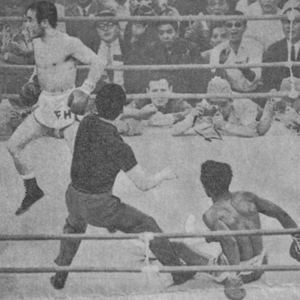
    写真:ファイティング原田vsベルナルド・カラバロ

     原田は気力で四たび世界の王座を守り抜いた——プロボクシング世界バンタム級選手権者、ファイティング原田(笹崎)対挑戦者同級二位ベルナルド・カラバロ(コロンビア)のタイトルマッチ15回戦は、四日午後八時十八分から東京・千代田の日本武道館に一万一千人の観衆を集めて行われ、原田は苦戦を続けながらも打ちまくり3-0で判定勝ち、昭和四十年十一月アラン・ラドキン(英)の初挑戦をしりぞけていらい四度目のタイトル防衛に成功した。これは元世界フライ級チャンピオン白井義男(王子)がつくった日本選手によるタイトル防衛回数とタイ記録の快挙である。

    ◇世界バンタム級タイトル・マッチ15戦
    ファイティング原田(笹崎)53.5キロ(118ポンド) 判定 ベルナルド・カラバロ(コロンビア)53.5キロ(118ポンド)

    ファイティング原田の経歴 東京都世田谷区深沢出身。昭和十八年四月五日生まれ、二十四歳。三十五年二月二十一日原田政彦の本名でフライ級から初出場。三十六年度全日本フライ級新人王となり、三十七年六月エドモンド・エスパルサ(メキシコ)に判定負けするまでに25連勝無敗を記録。同年十月十日ポーン・キングペッチ(タイ)を破って十九歳、最年少の世界フライ級選手権者となる。三十八年の一月のリターン・マッチで敗れ、バンダム級転向。四十年五月十八日エデル・ジョフレ(ブラジル)に挑戦して世界同級選手権を得、現在に至る。51戦48勝(17KO)3敗。三十八年十一月二十五のエミール・デ・レオン(比)戦以来17連勝。
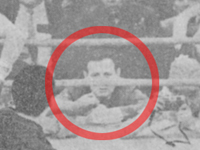
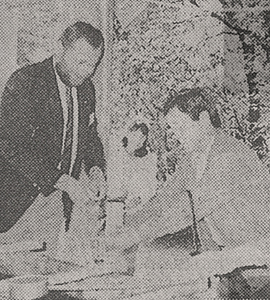
    写真:ハロルド・A・ドレイク

    掲載記事:【東京新聞 July05,1964】


    ハロルド・A・ドレイク氏の取材した星条旗新聞の記事

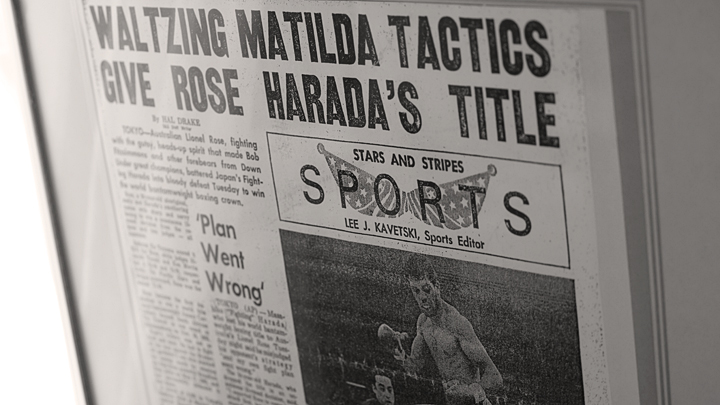
    Waltzing Matilda Tactics Give Rose Harada’s
    By Hal Drake[S&S Staff Writer]
    Fighting Harada,Lionel Rose
    Japan’s Fighting Harada went down after a left hook by Australia’s Lionel Rose in the ninth round of their world bantamweight title fight. Harada was up almost immediately, but the underdog challenger was too quick for the champion and won a 15-round decision in Tokyo.(AP)

    TOKYO — Australian Lionel Rose, fighting with the gutsy, heads-up spirit that made Bob Fitzsimmons and other forebears from Down Under great champions, battered Japan’s Fighting Harada into bloody defeat Tuesday to win the world bantamweight boxing crown.

    Rose, a 20-year-old aboriginal, coolly met Harada’s smothering rushes with sharp and nervy boxing to win a unanimous 15round decision from the referee and two judges — all Japanese.

    Referee Ko Toyama scored it 72-71 for Rose, while judges Hiroyuki Tezaki and Ken Morita had it 72-69 and 72-70, respectively. On Pacific Stars and Stripes scorecard, Rose was the winner 71-69.

    Rose became the the first Australian to win a world title since bantamweight Jimmy Carruthers kayoed South African Vic Toweel in one round at Johannesburg on Nov. 16, 1952.

    Rose’s victory was not as brief and easy. He had to fright all the way against the 24-year-old gardener’s son who shocked the boxing world by winning the title from powerful Brazilian Eder Jofre on May 17, 1965, and had successfully defended it four times.

    A crowd of 8,000 in Tokyo’s Budokan(Hall of Martial Arts) watched Harada, who reduced 25 pounds for the fight, rush out as though he wanted a short evening’s work. Trying furiously to press home a punishing body attack, he met a shield of elbows and a lance-like left hand Rose, fighting on the back up, also shot back snapping left hooks that grazed Harada’s close-cropped head but did not stun him. Rose landed a good right that bounced the champion to the ropes and a left that made him blink and grimace.

    Rose, brushing aside a warning from Toyama for cuffing, nailed Harada with a left and a right to the face in the second. He followed this with a resounding left hook to the side of the jew. But the champion got past the challenger’s longer reach with stabbing left hands to even the round. Rose, studious rather than aggressive, was still on a backward tandem.

    So it continued into the third — clearly Harada’s round. He drilled in three hard lefts, a left to the head and body, and a clean, cracking right cross to the head. He blasted away in a persistent. breath-crushing body attack.

    In the fourth, Rose changed his strategy — and the tide began to turn. Instead of backing up, he circled, repelling a Harada bayonet charge with a good inside left. But Harada staggered him briefly with a right hand. Sluggishly slow of reflex, the fading champion did not follow up. He only grazed Rose with a left-right combination before the dusky, dark-haired challenger described a perfect are in slipping off the ropes.

    The fifth was an exchange of pumping lefts, with Rose deftly singling out a half-healed gash over the right eye Harada had entered the ring with. It began to trickle blood. Again and again, Harada tried to rush Rose to the ropes or pin him in a corner. Many of his badly aimed punches went low. Rose slithered away and refused to lead — he made Harada come to him all the way.

    The sixth and seventh were Harada’s — out of sheer, aggressive persistence and not because he was able to do the challenger any decisive or permanent harm. Rose, though he lost a point in the sixth for open-glove punching, was just too fast.

    The eighth was even and the break came in the ninth. Rose landed what appeared to be a light right and left, the last blow landing on Harada’s chest. He went down to one knee, shoving at Rose as he did. The Australian went to both knees, facing the ropes. It did not appear that Harada was hurt but Toyama, as the Japanese rose after a short count, shoved him against the ropes and finished the mandatory eight count.

    The fact that Harada has not moved up to the featherweight division because of weight-making difficulties, and should have long ago, was shown up in the tenth. he took a sharp left to the jaw as the round started and tiredly pushed after Rose, who kept out of the way with ballet-like footwork. In the eleventh, Harada was worked over short hooks. A right cross by Rose in the twelfth had Harada awkwardly stumbling on one leg — and it was plainly evident that the Australian is punishing hitter but not a finisher. He otherwise might have put Harada away.

    Harada tried vainly to corner and crush the slippery, left-handed speedster whose truanting skill was talking his title away. No use. The championship belt he had entered the ring with was a tarnished relic when the final bell rang. It was Rose’s fight.

    Rose, when the decision was announced, fell to his knees and was pulled up by two handlers. An Australian cheering section in ringside seats jubilantly waved flags.

    Both fighters weighed in at 117 3/4 and the weight-making was plainly hurtful to Harada.

    He had originally planned to meet Jesus Pimentel, before the Mexican fighter balked at a contract that would have bound him to title defenses in Japan. Rose, ranked number six contender by the World Boxing Association, was an alternate, last-minute opponent.

    Rose reportedly got a purse of $7,500 plus round-trip air transportation and living expenses for three persons in Tokyo. Harada was expected to get around $50,000, but the figure was not officially announces.


    ‘Plan Went Wrong’

    title to Australia’s Lionel Rose Tuesday night said he misjudged his opponent’s strategy “and my own fight plan went wrong.”

    The 24-year-old Harada, who dropped the title in an unanimous 15-round decision, said, “I expected Rose to come in and attack first,but he didn’t. So I started to take the initiative myself. That is fight plan then went wrong.”

    Takeshi Sasazaki, Harada’s manager, conceded that “Rose is a good fighter and very fast on his feet. Harada has no excuse for the defeat.”


    Rose Sure – After Final Bell

    TOKYO(AP) — Lionel Rose, the Australian aborigine who decisioned Japan’s Fighting Harada to win the world bantam-weight boxing crown, said Tuesday “I wasn’t sure I had won the fight until the 15th round ended.”

    “Then,” he added, “I felt I had it sewed up.”

    The 20-year-old Australian called his opponent “a very good, very hard hitter. He had me in trouble a couple of times from punches to the midsection. He hurt me with blows to the solar plexus, but he never bothered my chin any.”

    Rose laughed and joked with a crowd of newsmen in his dressing room, but refused to accept a bottle of whisky offered to him by a Japanese.

    The new champion, who emerged from the fray unmarked, said, however, he hurt his right hand during the battle.

    His manager, Jack Rennie, said he felt that Rose “had taken Harada’s measure by the end of the third round.

    “We never went went to him. We made him come to us. It was a long planned strategy,” he said.

    Rennie said the Japanese had advised him that in order to win the title, Rose would have to carry the fight to Harada. “But that was a trap we didn’t fall into,” he said.

    “The fact that Lionel drew first blood spurred him on some. The only time that Lionel got into trouble was when he tried to slug it out with Harada. I had to keep cautioning him about that.”

    “But I told him to mix it up in the final round.”

    “Otherwise, I advised him not to slug, just stick to boxing.”

    Rennie said that Rose put Harada down in the ninth round with a left hook, but that it was not a hard punch.

    Rose agreed. “I think it was more of a slip than anything.”

    Both fighter and manager agreed that they had no complaints were Japanese. “How could we, the way it turned out?” Rennie grinned.

    Pacific Stars & Stripes
    Thursday, Feb, 29, 1968