Millard “Corky” Alexander, the genial editor and publisher of the Tokyo Weekender, a newspaper that has served as a forum for Tokyo’s foreign and English-speaking Japanese community for more than 30 years, collapsed and died Dec. 3rd in Tokyo. He was 73.
Friends said Alexander was enjoying a party with his wife Mary and their family at a private home when he suddenly lost consciousness. He was pronounced dead at a Tokyo hospital.
A friendly, outgoing Texan by birth and persuasion, Alexander came to Asia in the 1950s to cover the Korean War and its aftermath with a military Combat Photo Squadron. He took up residence in Japan as the editor of a monthly magazine for the U.S. Armed Forces in nagoya in 1955, then, in 1957, joined Pacific Stars and Stripes as an editor-reporter in Tokyo.
‘What a wonderful guy. On the golf course, at the poker table, in the newsroom, at the bowling alley, at his home — everywhere, he was the best-ever companion. As far as I know, everybody loved him. So did I.’
Fred Rehal, PS&S ’50s-’80s
In the 1960s, Alexander founded Image Public Relations in Tokyo doing entertainment PR work and publishing information for military personnel coming from Vietnam to Tokyo on rest and recreation leave.
“I had done plenty of research by that time and realized there was no one who was reporting on Tokyo’s foreign community,” Corky said in a Life in Japan column he wrote for Metropolis magazine.
The first Tokyo Weekender was published on Feb. 13, 1970 chronicling the small but active foreign community in Tokyo. True to his ways, Corky said that after the first issue come out, “We had a four-day party to celebrate.”
Alexander loved to play hard and work hard. “This toddlin’ old town was once a roaring, ‘round-the-clock wingding of a nonstop party,” he recalled in a Weekender column. “I recall running the streets of Roppongi, Ginza, Shimbashi, Toranomon, Yoshiwara(yes!) and environs in my early-to-mid 20’s till the pre-dawn hours, then making it to the office at 5, ready for a day’s work. Or for 18 holes on the golf course, never worse for wear.”
He was a longtime associate member of the Foreign Correspondents Club, the Tokyo chapter of the Veterans of Foreign Wars and the Tokyo American Club, where he published the club newspaper and later magazine. Glenn Davis, a longtime friend and fellow Texan said, “Corky was one of the best liked people in Tokyo, with hundreds of friends here and around the world.”
He is survived by his wife, Mary, and their four daughters, and eight grandchildren. Son-in-law Jim Merk is the Managing editor of the Weekender.
Champagne, not crepe, marks Corky’s death
By Hal Drake
Cork gone. What a kick in the heart.
The first thing I told myself, when I heard, was what a gloomy, crepe-hanging Christmas this was going to be.
But then I had to push that aside and recall the Cork of Christmas past — the roundelay that began in the shabby Quonset hut next to Pacific Stars and Stripes and rollicked on the John’s, the Silk Hat, the Green Spot and every plank-and-nail dive on the Roppongi Corner strip.
We should have been in our burrows at Washington Heights — listening to Lionel Barrymore read “A Christmas Carol” on FEN.
But there was too much merriment to go around; Corky always led the procession, the Pied Piper to next day’s hangover damnation.
A good woman married a good man. After a sudden job loss, Mary urged Corky to go out on his own — sell his talents as a free agent. Corky did it and did it well.
Cork had viscera; he flew in the face of discouraging odds when he started the Tokyo Weekender. So many such sheets had taken off, floundered along for a couple of issues, then crashed and burned. The Weekender made a smooth professional takeoff, easily cleared the runway and is soaring along 32 years later.
Cork was never a man who wore sorrow on his sleeve.
I recall the time he lost a brother and a close friend. No sad songs for Corky. He took fond memories out like keepsakes, recalling in particular how his brother used to drive under his bedroom window before dawn and honk him awake to go hunting.
knowing Corky was knowing people — people such as Steve Parker and Jean Pearce and Clyde McAvoy, Bill and Maria Glaza — too many to count or name.
Corky had friends.
He wad friend to me — a professional confidant who liked the ruffles and flourishes in my writing as much as I admired the jaunty humor in his.
He’s gone, and what have we left?
For my part and Kaz’s, there are wonderful memories of a wonderful guy and a warm, delightful family.
Corky Alexander died wealthy with love and beauty. He loved and was loved by a lovely family and worldwide community of friends.
I did’t shut out any holidays, icing up my last and only bottle of Moet Chandon to toast those wonderful times. There was no moratorium on merriment in the Drake house. Corky wouldn’t have wanted it that way.
August 2,2002
Medieval times live again as battles of yore are re-fought
Photos on this page by Kaz Drake
(Continued from Page 2)
raises two fingers in a plea for mercy.
“People of Rome,” thunders man-god Caesar, “what say you? Live or die”
Thumbs are thrust down and jeering specters watch a limp loser lifted off and dragged away. It’s simulated, but realistic; bloodless, but believable enough to satisfy any blood thirsty Caesar. Nero might have thrown a purse to the winner.
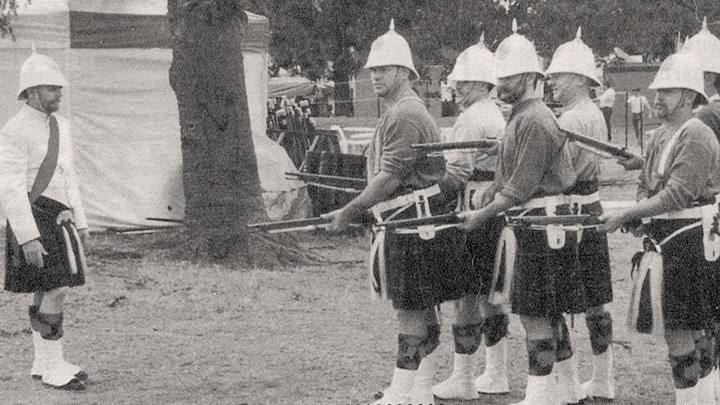
A muddy field away, centuries move briskly. Pikes and dirks make way for muskets. The Queensland Scottish Volunteer Corps, imaginary descendants of a colonial militia founded the century before last, fall out in kilts, grey tunics and pith helmets. Well-drilled devotees of times past, they shoulder antique Martini-Henry rifles, thumbing a bullet into breeches and dropping into a kneel-and-fire stance. Three rapid blasts of blank fire simulate the fire-at-will barrage that stopped savage Cetsuwayo in the Zulu War.
Why all this? Why not the sleeping past lie?
Megan McConnell, a re-enactor from way back, thinks that history can be safely revived.
“We do it first of all for the love of history,” McConnell says. “We want to bring back the values and craft that have been long lost. I suppose we like the romance of it all when it comes right down to it. A lot of re-enactors are terribly incurable romantics.”
Times past come into come into common behavior.
“We’re always terribly polite,” she asserts. “We always encourage politeness and courtesy and chivalry as a top aim.”
The loss of old values and common courtesy irks medievalists like McConnell who might have enjoyed lunch with a family of poisoners who were polite to the last drop of hemlock
“The Borgias must have been a lot of fun,” she speculates.
The battles of Hastings and the Hundred Years War are safely but realistically saved by knights who strike with sprit but care, rattling shields instead of skulls. Mock dead tumble lose from the melee, lying were they fall until squires lug them away.
Maria Howell joined the annual procession six years ago, 21 years after it was started by amateurs and then became a processional run by professionals.
“I actually do re-enactments for a living,” Howell says, relating that she takes troupes of re-enactors to parks and school grounds, teaching the young of the world that was here long before the ancestors of their ancestors.
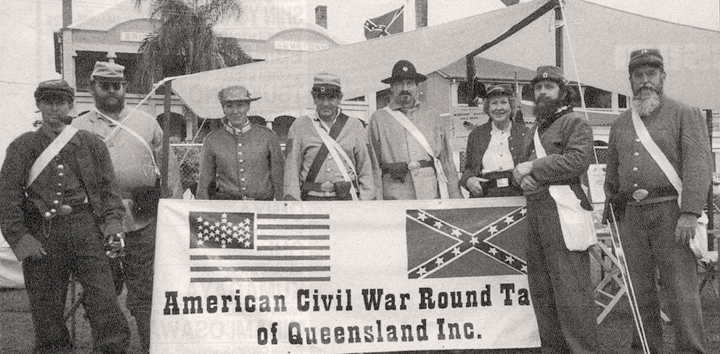
Far from halberd or musket, people like Private Stalker, CSA, march across time. This Stalker tells of donning the grey and changing his identity from Ed Best, a founding member of the American Civil War Round Table of Queensland. Best’s Confederate credentials are authentic. He’s originally from Atlanta and his native drawl is salted with a dash of Queensland.
Why should Queenslanders care about what happened at Bull Run or Appomattox?
“Actually, Australians like the underdog and they like to buck the system,” Best says. “If you do that here, you’re highly admired.”
And so Camp Stonewall, as this Confederate encampment is known, is full of recruits bucking the tides of time. But there’ll be no mock battles or Springfield rifles cracking here — only a roundtable discussion of what went wrong at Gettysburg or Stone Mountain. Civil War buffs are invited to sit in.
Bonnie Newton will note that in those genteel times, women marched upright into Yankee or Rebel fire. In Pennsylvania, she saw that the middle of the Gettysburg battleground was desecrated by a highway, butting General George Pickett off from his fatal advance.
Australians who join the Confederacy here may find that their uniforms have a familiar feel — old Aussie Army blankets dyed storm-cloud grey.
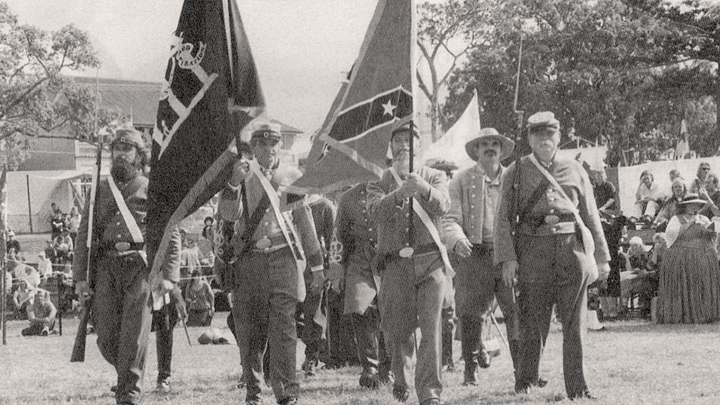
They’ll look sharp. Flag bearers will carry Rebel colors, the Georgia State flag and the tattered, last-stand banner of the Army of Northern Virginia.
Behind them are soldiers who might be ghosts risen from many battlegrounds — Picts, Goths, Vikings, Teutonic Knights, Crusaders, Saracens, Prince Rupert’s Bastards and any barbarian bastard who wants to march along.
Above and beyond this, traffic moves along, driven by indifferent grownups who have forgotten how to have imaginative and uninhibited fun.
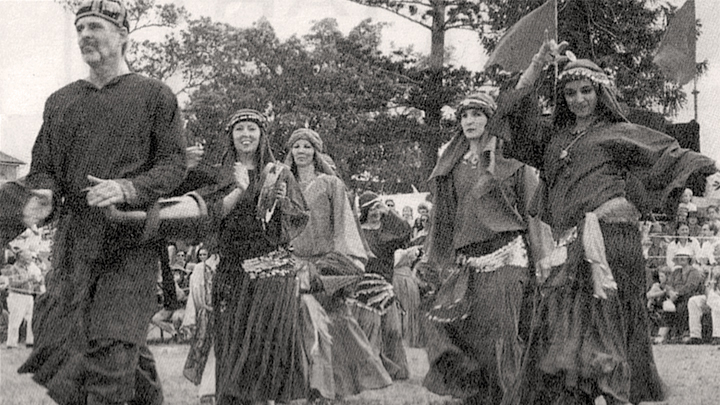
Ladies of the medieval court.
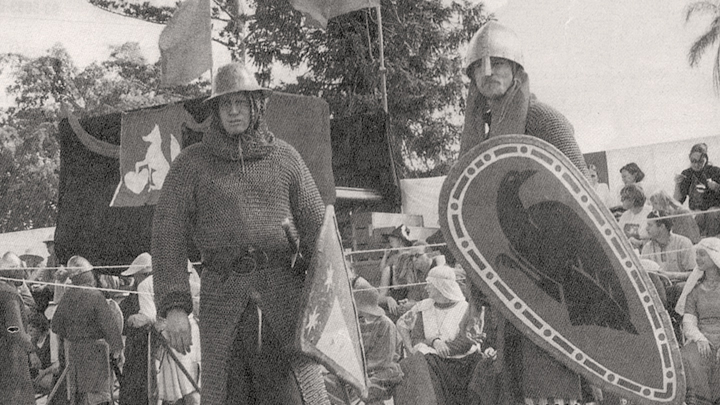
Shield, helmet, iron knitting of chainmail, are hand-done.
Confederate encampment readies itself for tabletop battle.
MESSAGE OF WELCOM FROM HIS WORSHIP THE MAYOR COUNCILLOR GARY BAILDON
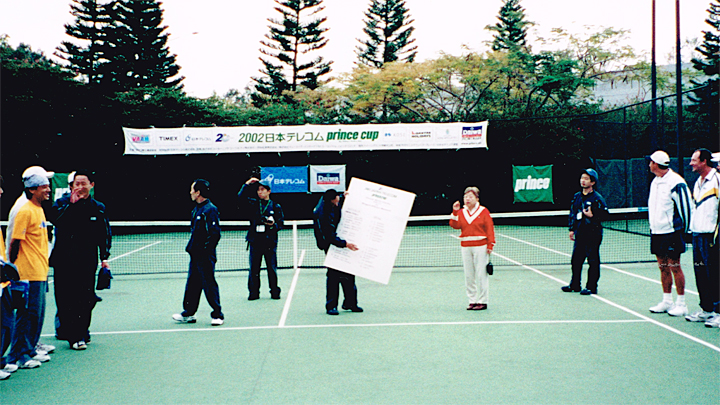
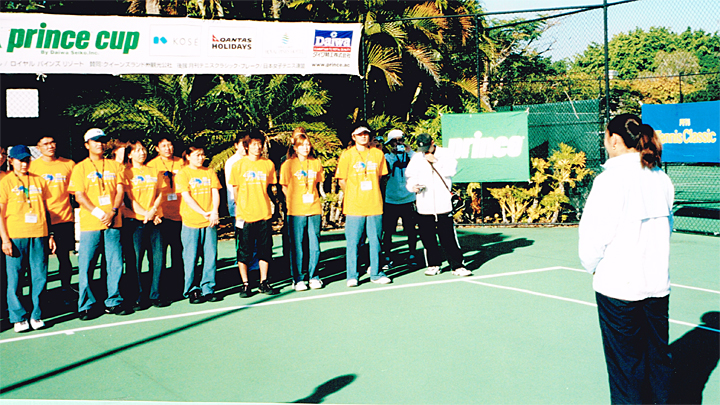
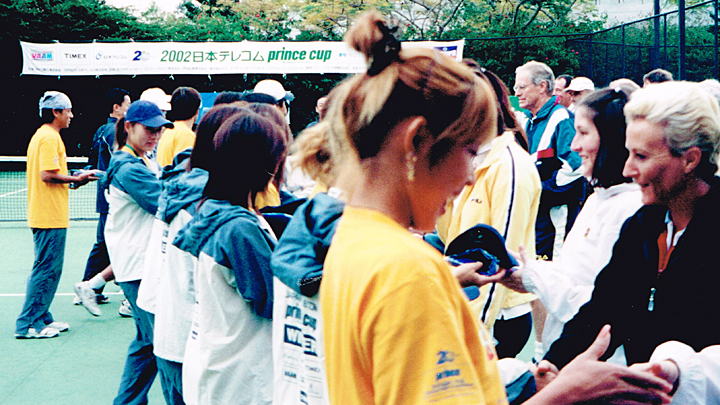
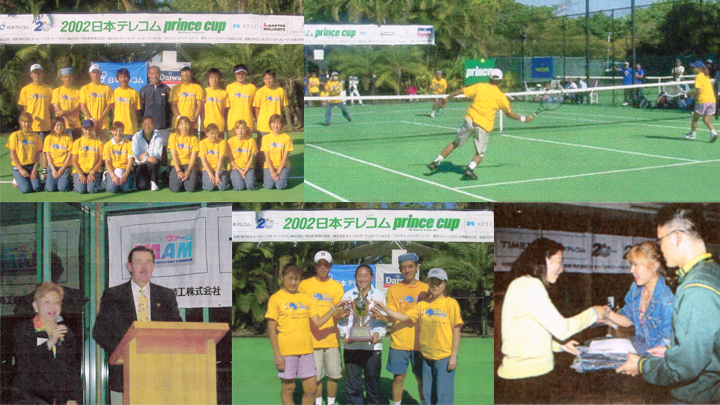
As Mayor of the City of Gold Coast, it is with great pleasure that I extend a warm welcome to players, officials, sponsors and spectators involved in the 2002 PRINCE CUP FINAL.
The Gold Coast is Australia’s premier tourist destination and Australia’s sixth largest city. We’re also on track for the title of Australia’s sports and events capital. We are honoured to host this year’s PRINCE CUP and I hope that you will be able to experience the wonderful facilities and lush hinterland rainforests, the Gold Coast boasts cosmopolitan restaurants, exciting nightlife, action packed theme parks, wonderful shopping centres and Australia’s largest number of world-class golf courses. Our residents and visitors are truly spoilt! Royal Pines is a wonderful venue for a tennis tournament and it has been the venue for both the Thalgo Woments Tennis Championship and the ANZ Wormens Golf Championship for a number of years. Both events have been extremely successful. You will be well looked after and welcomed. I do hope you enjoy your stay in our beautiful City.
GARY J BAILDON
MAYOR
MESSAGE OF WELCOM FROM THE PRESIDENT OF TENNIS GOLD COAST, GARY CORBETT
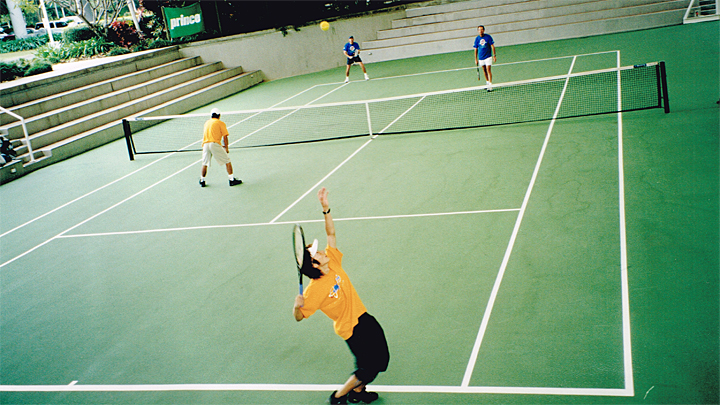
On behalf of Tennis Gold Coast I would like to offer a sincere welcome to the beautiful Gold Coast to each and every player competing in the Prince Cup. It is pleasing to note that Daiwa Seiko Inc. has chosen the Gold Coast as the new venue for Prince Cup after staging the tournament final in Hawaii for 19 years. The Gold Coast is one of Australia’s premier tennis locations, with many of the country’s top coaches and players based here. Royal Pines Resort – the venue for the Prince Cup – is also the venue for the Australian Women’s Hardcourt titles which was won by Venus Williams in early January. I hope the 2002 Prince Cup tournament is a resounding success and that it remains on the Gold Coast for many years to come. I am sure many local club tennis players will be interested to see the standard of play during the course of the tournament. Hopefully many long and lasting tennis friendships will be forged as a result of this prestigious tournament being staged here on the Gold Coast.
Gary Corbett
Tennis Gold Coast
President
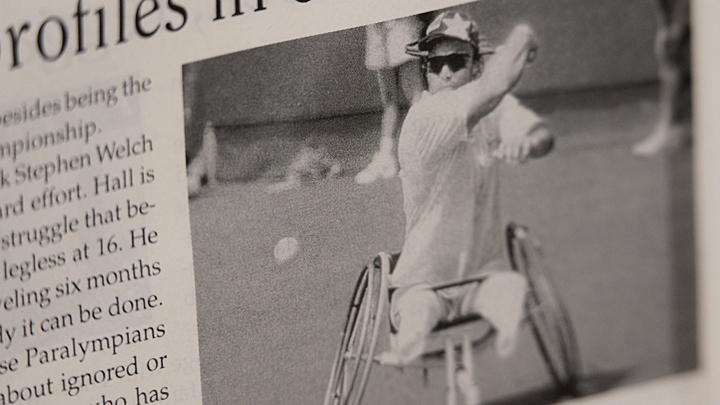
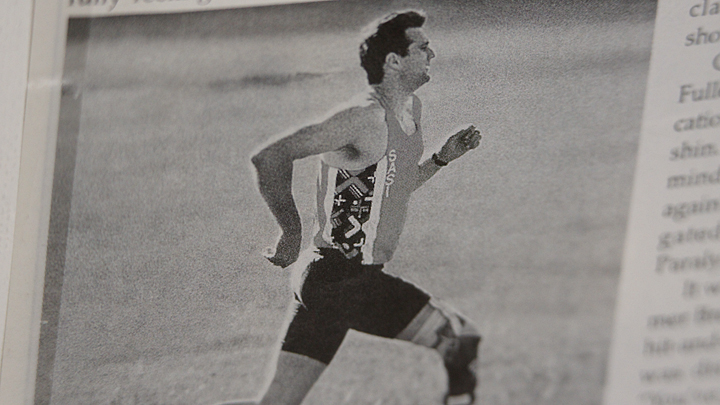
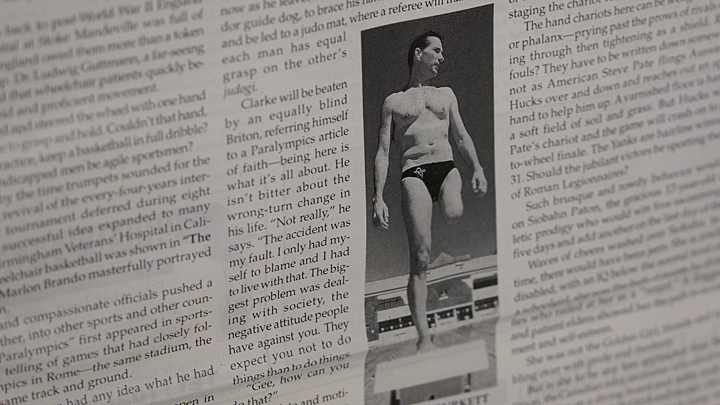
それは第二次世界大戦直後にさかのぼる。イギリスのストーク・マンデヴィルという町の大病院に収容された、身体に障害を負った復員兵たちこそ、国が恩給や記念品以上の礼を尽くすべき人々である。入院患者が極めて短時間で車椅子を使いこなすようになることに目をつけたのが、神経外科担当のルド、ヴィッヒ・グットマン医師だった。患者たちは片手で巧みに車椅子を操作しながら、もう片方の空いた手で物を持つことまでできる。これを応用すればバスケットボールのドリブルも可能ではないか。これなら、障害者でも立派なスポーツマンになれる。期を同じくして、大戦により8年間延期されていた1948年オリンピックのファンファーレが鳴り響いた。4年に1度の世界のスポーツの祭典の復活である。障害者スポーツのアイデアは至る所で発展し、カリフオルニアのパーミンガム退役軍人病院で車椅子パスケットボールが行われた。これを映画化した「男たち」(原題 “The Men”、日本来公開)では、マーロン・ブランドが障害を負った復員兵を好演している。引き続き、関係者の創造性と熱意が、このアイデアを他のスポーツ、他の固にまで発展させた。1960年のオリンピックローマ大会にあたって、「パラリンピック」という言葉が初めてマスメディアに萱場し、オリンピック直後に同じ競技場で開催することが決定された。話がここまで発展するとは、グットマン医師も考えていなかっただろう。ましてや、2000年シドニー大会で繰り広げられた熱戦のことなど、予想もつかなかったのではないか。車椅子でテニスコートを縦横無尽に駆け巡るポーカー・フェイスの選手は、国際車椅子テニスチャンピオンのデイヴィッド・ホール。ホールはこのタイトル防衛と同時に、オーストラリアに初のパラリンピック金メダルをもたらした。
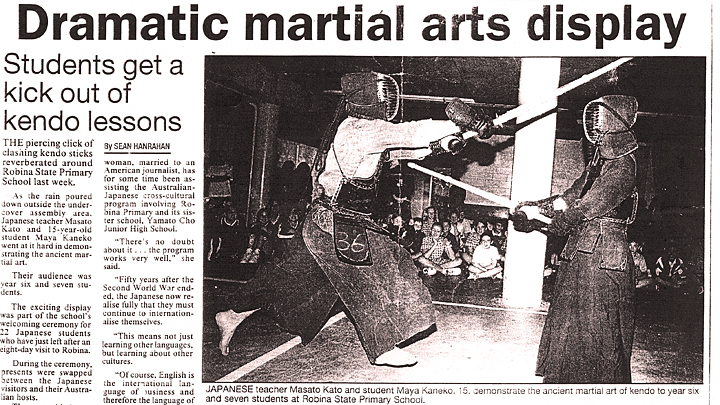
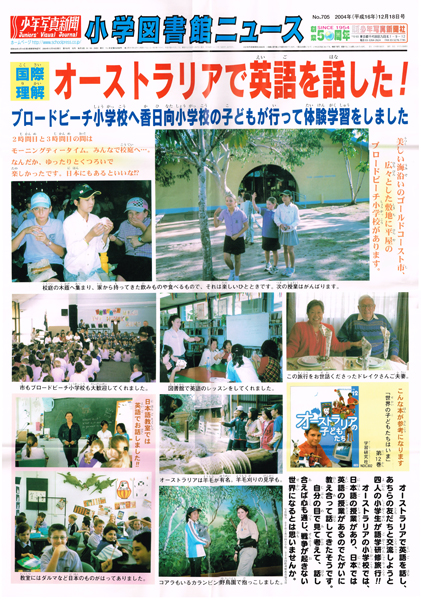
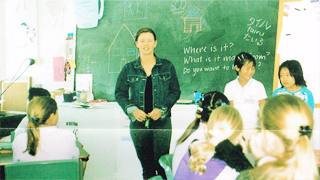
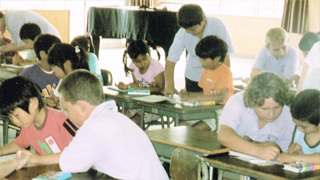
THE piercing click of clashing kendo sticks reverted around Robina State Primary School last week.
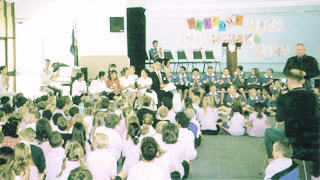
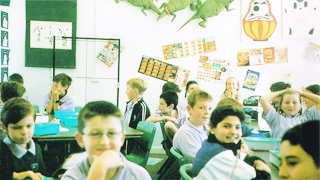
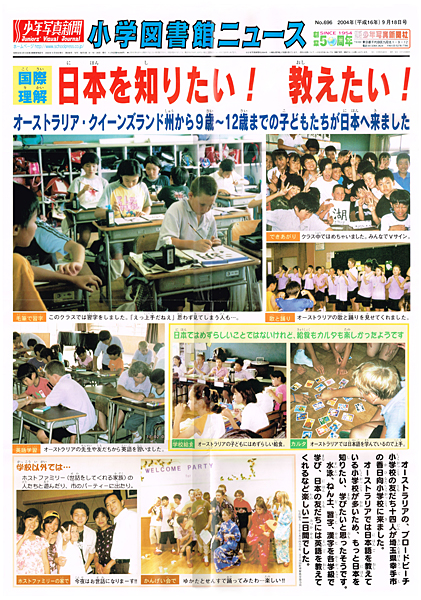
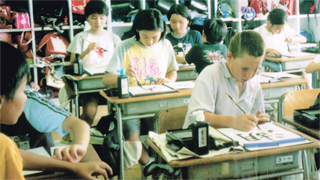
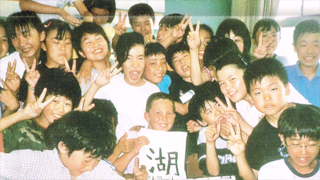
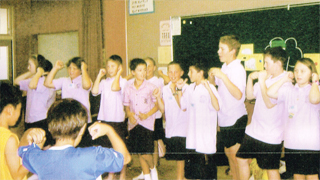
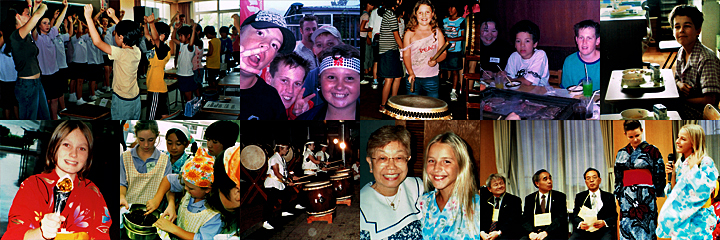
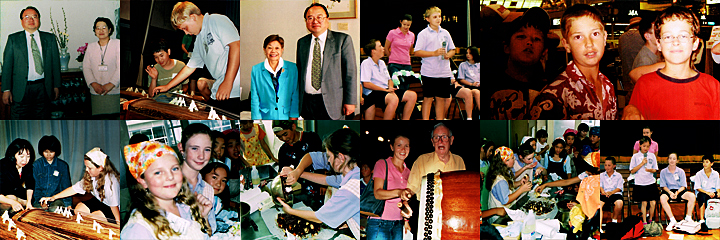
As the rain poured down outside the undercover assembly area, Japanese teacher Masato Kato and 15-year-old student Maya Kaneko went at it hard in demonstrating the ancient martial art. Their audience was year six and seven students. The exciting display was part of the school’s welcoming ceremony for 22 Japanese students who have just left after an eight-day visit to Robina.
During the ceremony,presents were swapped between the Japanese visitors and their Australian hosts. The assembled students enjoyed several popular songs by the school band, as well as some cappella performances by the Japanese students. Teacher, child psychologist and businesswoman, Kaz Drake, watched the proceedings with obvious satisfaction. The tiny Japanese woman married to an American journalist, has for some time been assisting the Austrian-Japanese cross-cultural program involving Robina Primary and its sister school, Yamato Cho Junior High School.
“There’s no doubt about it… the program works very well,” she said. “Fifty years after the Second World War ended, the Japanese now realize fully that they must continue to internationalize themselves. “Of douse, English is the international language of business and therefore the language of most importance to the Japanese.”
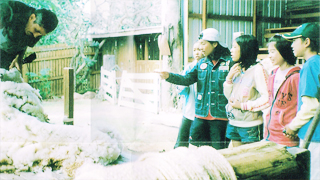
The Yamato Cho-Robina connection has flourished since a fact-finding visit to Australia in 1994 by educationalists from the Gifu Prefecture, where Yamato Cho is located. This is about an hour’s drive from the sacred city of Kyoto. Robina Primary’s principal, Paul Bird, spoke to the visitors and a sister city relationship between the two schools quickly developed. Since then, Robina students have spent time in Japan every year. They have enjoyed the opportunity of staying with at Yamato Cho. Japanese students of Yamato Cho have done the same here every year. The 22 Japanese students who visited Robina this year came with Mr Kato; Yamato Cho’s principal, Mr Kenji Sakai; and another teacher from Yamato Cho, Mr Yoshimasa Wada. Many ongoing relationships between the Japanese and the Australians have also developed over the years. Yamato Cho’s Kitty Wong kept open the lines of communication between herself and Robina Primary and family she stayed with here three years ago before moving to the Coast to become a student at Robina State High School. This year, Robina Primary 7MB student, Jared Mosley, spent two weeks in Japan studying kendo, following a 10-day exchange trip there.
Mrs Drake said Jared, 12, made his second trip on a scholarship provided by her company because he was ‘really interested in the Japanese culture’. “That included the food… I think he tried every single dish he came across!”
Interestingly, Mrs Drake said the Japanese students who visit Australia find family life here very rewarding and respect young Australians have for their parents.
Kaz Drake, accomplished sports promoter and entrepreneur extraordinaire, has been appointed Ambassador of the Asia Pacific Masters Games on Australia’a Gold Coast Oct. 28-Nov. 5. Drake will act as liaison and helpmate for an event that last year burst over its Pacific borders to draw 9,500 competitors from 40 countries at all points of the compass from Argentina to Venezuela.
There were too few Yanks, Drake says, and she wants to change that. “We want anybody from Hawaii to New York. Japanese, too–any flag, any country.” ASPAC will follow that, but Drake insists it won’t be a crowd-chaser behind those main-event games and the Paralympics for handicapped competitors.
On Gold Coast, 43 events will be held in a more-the-merrier sports marathon on many fields and venues. There will be sports as genteel as lawn bowling and as rugged as Rugby Union. Skipping surfing in Australia would be like scratching soccer in England, the reason seasoned competitors will break surf at some of the best beach breaks. And there’ll be gifted amateurs on many fine tennis courts.
in Australia, you’re not old–just older. Minimum age in most ASPAC categories is 30, although swimmers can be as young as 25. Taekwondo entrants can be as dated 60-plus. A woman in the flyweight class can be as light as 117 lbs. If you’re a fit and supple 30 to 70 and up, there will be the swim, cycle and run triathlon.
Gold Coast is the star in the State of Queensland’s crown, with old and touristy names such as Broadbeach and Surfers Paradise. Drake says ASPAC is a fair bid to be an international athletic site.
One thing hoped for this year is that many Japanese will attend. There were none there in 1998, and some of the best were shut out because of Japan’s economic downturn, which meant individual or corporate teams were denied travel fares.
ASPAC officials are encouraged by nibbles from baseball, volleyball and rugby teams, a healthy sign some of the best may be back. Interested persons should contact Kaz Drake by email at aspac@mastersgames.com.au
2nd Asia Pacific Masters Games(2002 Gold Coast)
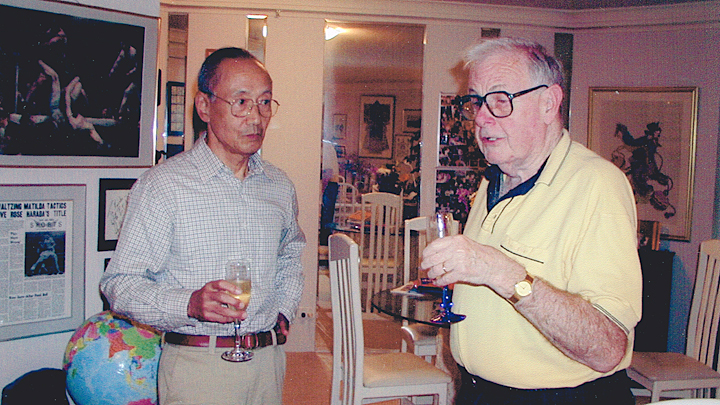
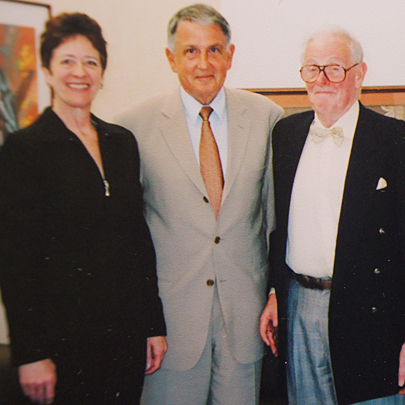
Mr. Takahira and Mr. Hal Drake
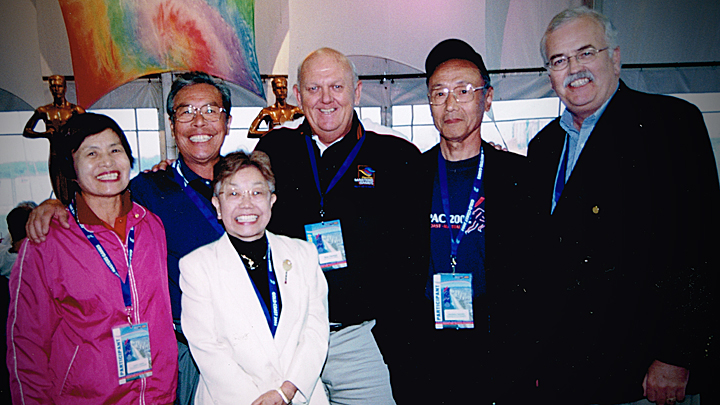
Mr. and Mrs. Takeya, S. Parkins(Exe. Manager), Mr. Takahira(Swimming Winner), Kerry Watson(Chairman), Kaz Drake(Offical Games Ambassador)
![写真:千葉日報[2001.06.26]](https://drakefund.net/wp/img/20010626_chiba.jpg)